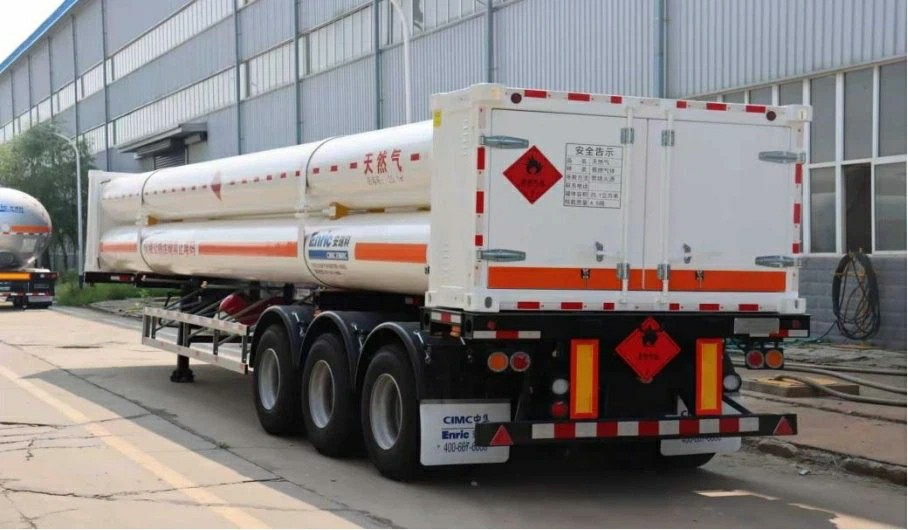
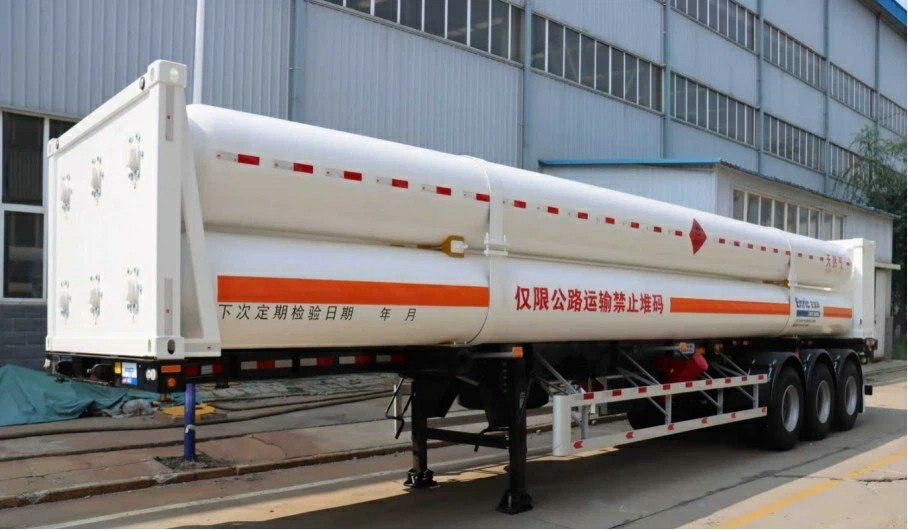
Specialized Tank Semi-trailer for CNG Gas Transportation
Specialized tank semi-trailer for LNG/CNG gas transportation, the first choice for export energy transportation! LNG tanks withstand ultra-low temperatures of -196℃, while CNG tanks feature stable pressure resistance. The two categories cover different gas transportation needs. Equipped with double-layer insulation/high-strength tanks + intelligent safety systems, it has passed international certifications. It supports customization according to the regulations of target countries, adapts to global road conditions, efficiently safeguards energy transportation, and is safe, reliable, and compliant.
Core Advantages
Dual-category Adaptability: Covers transportation of LNG (ultra-low temperature of -196℃) and CNG (high pressure). LNG tanks lock in temperature and maintain cold, while CNG tanks have strong pressure resistance, meeting different gas transportation needs.
Comprehensive Safety: Double-layer insulation/high-strength tanks + leakage monitoring and emergency shut-off systems, passing international certifications such as ISO and ADR, ensuring safety throughout transportation.
Global Compliance: Supports 2-3 axle configurations, interface customization, and left/right-hand drive customization, adapting to regulations in regions such as Europe, America, Africa, and Southeast Asia. Core components are durable and easy to maintain, reducing operating costs.
Parameters
|
Specification Category |
Core Parameters (LNG Version) |
Core Parameters (CNG Version) |
|
Tank Configuration |
Material: 304 stainless steel; Volume: 20-45m³ |
Material: Q345R/304 stainless steel; Volume: 15-30m³ |
|
Temperature/Pressure |
Design temperature: -196℃; Working pressure: 0.8-1.6MPa |
Design pressure: 20-25MPa; Working at room temperature |
|
Safety System |
Safety valve + leakage alarm + emergency shut-off valve |
Same as LNG version, with additional bursting disc |
|
Vehicle Configuration |
Axle group: 2-3 axles; Braking: ABS/EBS |
Same as LNG version |
|
Connection Interface |
Standard LNG loading/unloading interface (customizable) |
High-pressure CNG dedicated interface (compatible with international standards) |
FAQ
Q: Can the same vehicle transport both LNG and CNG at the same time?
A: No. The two types of tanks have different structures (LNG tanks are double-layer vacuum insulated tanks, while CNG tanks are single-layer high-pressure tanks). Corresponding specialized tank trucks must be used separately to avoid safety risks caused by mixed loading.
Q: Can the vehicle's safety system handle emergencies during transportation?
A: Yes. It is standard equipped with safety valves, emergency shut-off valves, and leakage alarms. CNG tanks are additionally equipped with bursting discs, which can monitor pressure/leakage in real-time. Compliant with international standards such as ISO and ADR, it can quickly cut off gas sources in case of emergencies.
Q: How to judge whether the tank is in normal condition during daily use?
A: For LNG tanks, check the daily evaporation rate (if exceeding 0.3%, maintenance is required); for CNG tanks, test pressure stability. Regularly check the validity period of safety accessories and the tightness of pipelines to avoid damage to low-temperature/high-pressure components.
Q: What are the recommendations for vehicle maintenance cycles?
A: Safety accessories should be calibrated once every 6 months, and the thermal insulation performance of the tank should be tested annually; the braking system (ABS/EBS) should be inspected every 3 months, and hydraulic pipelines should be checked for leaks quarterly to ensure long-term stable operation.