When it comes to the transportation industry, semi - trailers play a pivotal role in moving goods across various distances. As a semi - trailer supplier, I've witnessed firsthand the diverse needs of our clients and the importance of understanding the loading capacity differences between different types of semi - trailers. This knowledge is crucial for businesses to make informed decisions about their transportation requirements, ensuring efficiency and cost - effectiveness.
Flatbed Semi - trailers
Flatbed semi - trailers are one of the most common types in the industry. They are characterized by their open, flat deck, which allows for easy loading and unloading of a wide range of cargo. The loading capacity of flatbed semi - trailers can vary significantly based on several factors.
Typically, a standard flatbed semi - trailer can have a loading capacity ranging from 20 to 48 tons. The length of the trailer is a major determinant of its capacity. Longer flatbeds, usually around 48 to 53 feet, can carry heavier loads compared to shorter ones. For instance, a 48 - foot flatbed can often handle up to 45 tons, while a 53 - foot flatbed may be rated for up to 48 tons.
However, other factors also come into play. The design and construction of the trailer frame are crucial. A well - built frame with high - strength steel can support more weight. Additionally, the axles of the flatbed contribute to its loading capacity. Trailers with more axles can distribute the weight more evenly, allowing for a higher overall load. For example, a flatbed with a tri - axle configuration can carry more than a single - axle or tandem - axle flatbed.
Flatbed semi - trailers are ideal for transporting large, heavy, and irregularly shaped items such as construction equipment, steel beams, and large machinery. Their open design makes it easy to secure these types of cargo using chains, straps, or other tie - down methods.
Tanker Semi - trailers
Tanker semi - trailers are designed specifically for transporting liquids or gases. The loading capacity of tanker semi - trailers is primarily determined by the volume of the tank.
There are different types of tanker semi - trailers, including those for transporting gasoline, diesel, chemicals, and food products. For example, an Aluminum Alloy Gasoline and Diesel Tank Semi - trailer is commonly used in the fuel transportation industry.
The capacity of these trailers is usually measured in gallons or liters. Smaller tanker semi - trailers may have a capacity of around 3,000 to 5,000 gallons, while larger ones can hold up to 11,600 gallons or more. The size and shape of the tank, as well as the material it is made of, affect the capacity. Aluminum alloy tanks are often used for their lightweight and corrosion - resistant properties, which can allow for a relatively higher payload compared to steel tanks of the same size.
In addition to the tank volume, the legal weight limits also play a role in determining the actual amount of liquid or gas that can be transported. The weight of the tank itself, along with the weight of the trailer structure and any additional equipment, must be considered to ensure compliance with transportation regulations.
Low - bed Semi - trailers
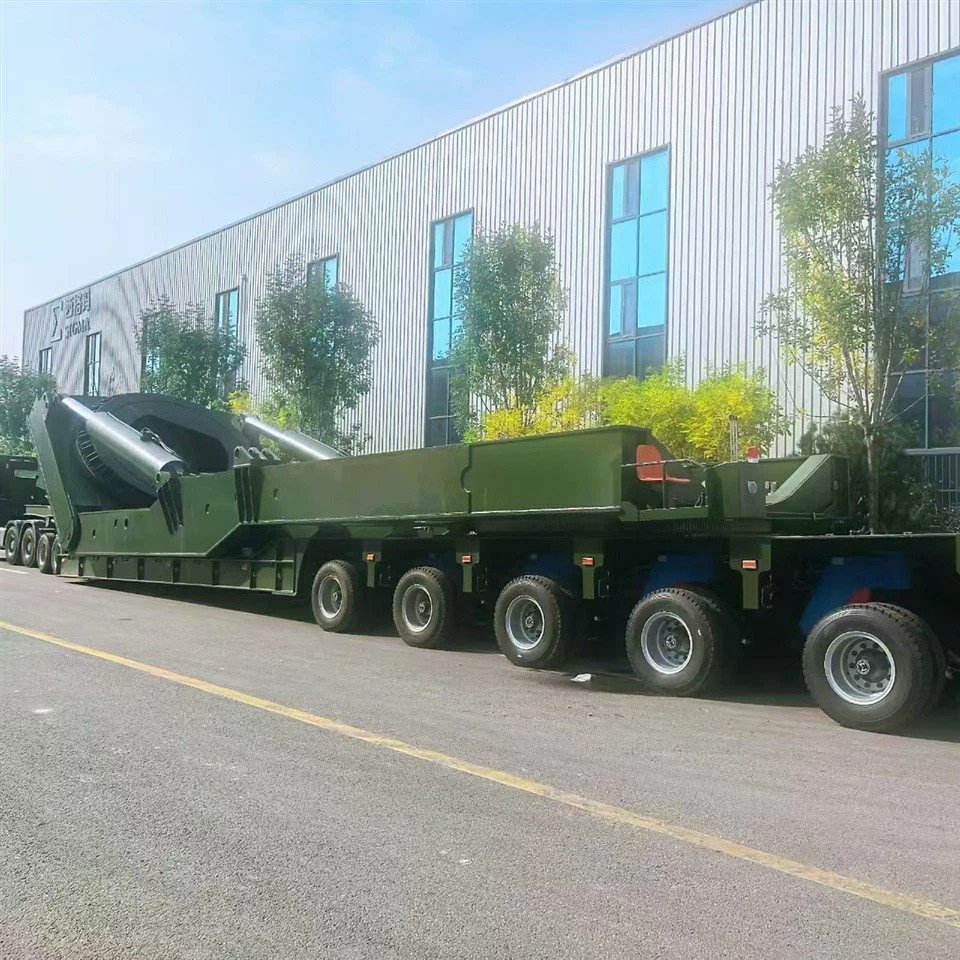
Low - bed semi - trailers, also known as low - boy trailers, are designed to transport heavy and oversized loads. These trailers have a lower deck height, which allows for the transportation of tall equipment that would otherwise exceed height restrictions on standard trailers.
The loading capacity of low - bed semi - trailers can be quite substantial. A typical low - bed semi - trailer can carry loads ranging from 25 to 80 tons or more. The capacity depends on factors such as the length of the trailer, the number of axles, and the design of the frame.
For example, a Special Low - bed Trailer for Wind Power Generation Equipment is specifically engineered to handle the large and heavy components of wind turbines. These trailers often have a high loading capacity due to their robust construction and multiple axles to distribute the weight evenly.
The low - bed design also allows for better stability when transporting heavy loads. The lower center of gravity reduces the risk of tipping during transit, making them suitable for long - distance transportation of heavy machinery, large vehicles, and construction materials.
Box - type Semi - trailers
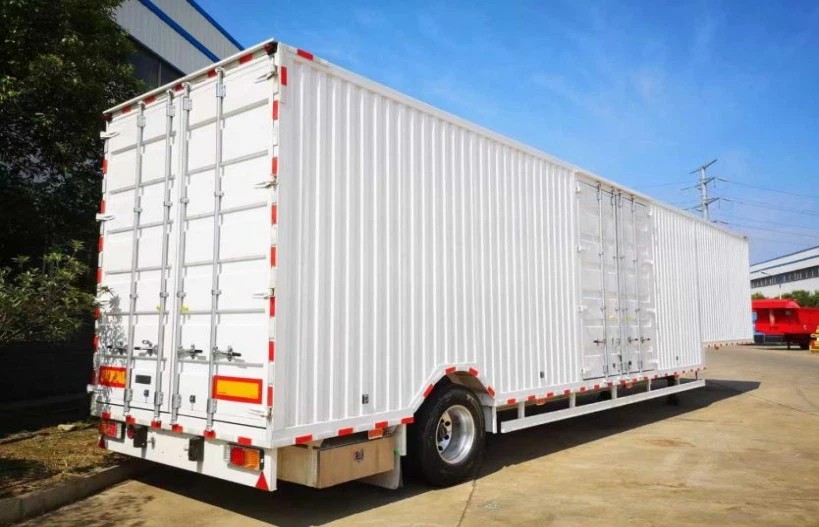
Box - type semi - trailers, also called dry vans, are enclosed trailers used for transporting general freight. They provide protection for the cargo from the elements and are commonly used in the freight logistics industry.
The loading capacity of Freight Logistics Box - type Semi - trailer is determined by both the volume and the weight - carrying capacity. The interior volume of a standard box - type semi - trailer can range from 2,000 to 3,000 cubic feet.
In terms of weight, a typical box - type semi - trailer can carry up to 45,000 pounds (about 20.4 tons). However, this can vary depending on the trailer's construction and the number of axles. Some box - type trailers with additional axles or a stronger frame may be able to carry more weight.
Box - type semi - trailers are suitable for transporting a wide variety of goods, including consumer products, electronics, and perishable items when equipped with refrigeration units. Their enclosed design protects the cargo from damage, theft, and adverse weather conditions.
Conclusion
Understanding the loading capacity differences between different types of semi - trailers is essential for businesses in the transportation and logistics industry. Each type of semi - trailer has its unique characteristics and is designed to meet specific transportation needs.
As a semi - trailer supplier, we are committed to providing high - quality trailers that meet the diverse requirements of our clients. Whether you need to transport heavy machinery, liquids, or general freight, we have the right semi - trailer for you.
If you are in the market for a semi - trailer and need more information about loading capacities or other features, we encourage you to contact us for a detailed discussion. Our team of experts can help you select the most suitable semi - trailer for your business, ensuring that you get the best value for your investment.
References
"Transportation Engineering Handbook", edited by the Institute of Transportation Engineers.
"Trailer Design and Manufacturing Standards", published by the National Association of Trailer Manufacturers.