Hey there! I'm a supplier of platform semi - trailers, and I've seen my fair share of challenges when it comes to the transportation of these bad boys. One of the most crucial aspects that every trucker and fleet manager cares about is the stability of the platform semi - trailer during transportation. A wobbly trailer can lead to all sorts of problems, from damaged cargo to dangerous driving conditions. So, in this blog, I'm gonna share some tips on how to improve the stability of a platform semi - trailer during transportation.
1. Proper Loading
The way you load your platform semi - trailer plays a huge role in its stability. First off, you need to distribute the weight evenly across the trailer. Uneven weight distribution can cause the trailer to tilt to one side, making it more likely to tip over, especially when taking turns or in windy conditions.
Start by placing the heaviest items at the bottom and towards the center of the trailer. This lowers the center of gravity, which is key to stability. For example, if you're hauling a mix of heavy machinery and lighter crates, put the machinery in the middle and at the base, and then stack the crates on top.
Also, make sure to secure the cargo properly. Loose cargo can shift during transit, changing the weight distribution and throwing off the trailer's balance. Use straps, chains, and other securing devices to keep everything in place. You can check out our 40 - foot Flatbed Semi - trailer and 45 - foot Flatbed Semi - trailer models, which are designed to accommodate different types of cargo and come with features to help with proper loading and securing.
2. Tire Maintenance
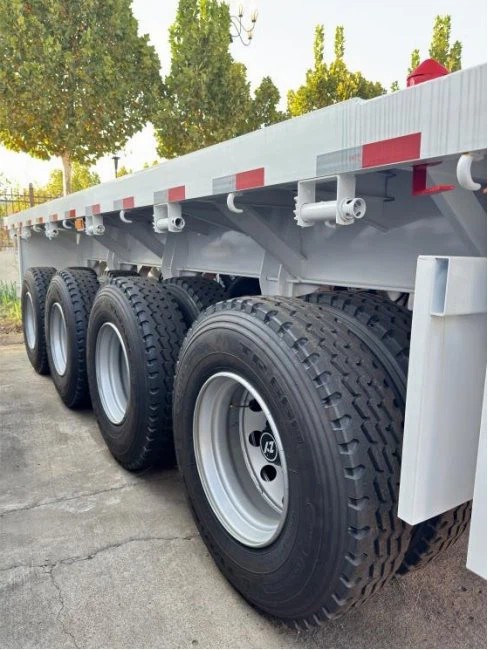
Tires are the only thing connecting your trailer to the road, so they're super important for stability. Make sure your tires are in good condition. Check the tire pressure regularly. Under - inflated or over - inflated tires can affect the trailer's handling and stability. You should follow the manufacturer's recommended tire pressure, which is usually listed on the trailer or in the owner's manual.
Inspect the tires for wear and tear, such as uneven tread wear or cuts. Worn - out tires can cause the trailer to bounce or sway, especially at high speeds. Replace the tires when they reach the recommended tread depth. Also, make sure the tires are properly aligned. Misaligned tires can cause the trailer to pull to one side, making it harder to control.
3. Suspension System
The suspension system of your platform semi - trailer is responsible for absorbing shocks and keeping the trailer stable on the road. A good suspension system can reduce the impact of bumps and potholes, preventing the trailer from bouncing around too much.
Regularly inspect the suspension components, such as springs, shock absorbers, and axles. Look for signs of damage or wear, like broken springs or leaking shock absorbers. Replace any worn - out parts as soon as possible. Upgrading to a high - quality suspension system can also improve the trailer's stability, especially if you're hauling heavy or unevenly distributed loads.
4. Trailer Design
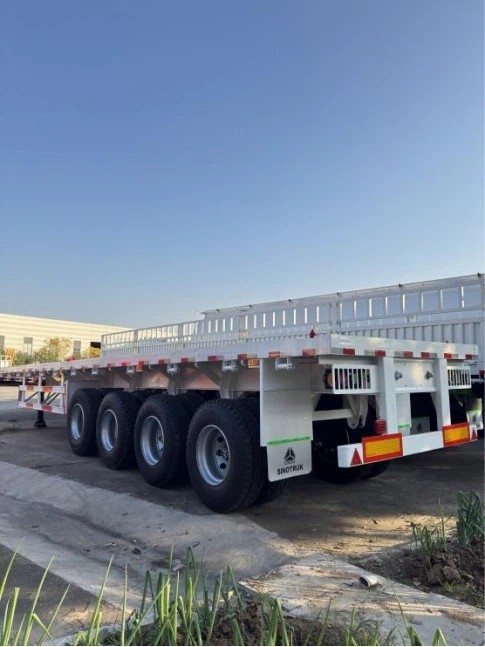
The design of the platform semi - trailer itself can have a big impact on its stability. For example, the width and length of the trailer can affect its center of gravity and handling. A wider trailer is generally more stable than a narrow one, as it has a larger base of support.
The height of the trailer also matters. A lower - profile trailer has a lower center of gravity, which makes it less likely to tip over. When choosing a trailer, consider the type of cargo you'll be hauling and how it will affect the trailer's balance. Our 40 - foot Flatbed Semi - trailer and 45 - foot Flatbed Semi - trailer are designed with stability in mind, with features like a wide base and a low - profile design.
5. Driving Techniques
The way you drive the truck pulling the trailer can also affect the trailer's stability. First, drive at a safe speed. High speeds increase the risk of the trailer swaying or tipping over, especially when taking turns or in windy conditions. Slow down when approaching curves, intersections, or areas with poor road conditions.
When braking, do it gradually. Sudden braking can cause the trailer to jackknife or bounce, which can be extremely dangerous. Use engine braking whenever possible, as it helps to slow down the truck and trailer more smoothly.
When turning, take wide turns to avoid putting too much stress on the trailer. Make sure to signal early so that other drivers know your intentions. Also, be aware of the wind. Strong crosswinds can push the trailer to one side, so adjust your driving accordingly.
6. Regular Inspections
Regular inspections of the platform semi - trailer are essential for maintaining its stability. Before each trip, do a quick visual inspection of the trailer. Check the tires, suspension, lights, and cargo securing devices. Look for any signs of damage or wear that could affect the trailer's stability.
Periodically, have a professional mechanic perform a more thorough inspection of the trailer. They can check the brakes, axles, and other critical components to make sure everything is in good working order. Catching and fixing problems early can prevent more serious issues from occurring during transportation.
7. Weather Considerations
Weather conditions can have a significant impact on the stability of a platform semi - trailer. In rainy or snowy conditions, the road surface becomes slippery, which can reduce the traction of the tires. Slow down and increase your following distance to avoid skidding.
In windy conditions, be extra cautious. Strong crosswinds can push the trailer to one side, especially if it's carrying a large or lightweight load. If possible, wait for the wind to die down before hitting the road. If you have to drive in windy conditions, keep a firm grip on the steering wheel and make small adjustments to keep the trailer in line.
8. Training and Education
Proper training and education for truck drivers are crucial for ensuring the stability of platform semi - trailers during transportation. Drivers should be trained on how to load and secure cargo properly, how to perform pre - trip inspections, and how to drive safely with a trailer.
Many companies offer training programs for truck drivers, which cover topics like trailer stability, driving techniques, and safety regulations. Encourage your drivers to participate in these programs to improve their skills and knowledge.
In conclusion, improving the stability of a platform semi - trailer during transportation requires a combination of proper loading, tire maintenance, suspension system upkeep, good trailer design, safe driving techniques, regular inspections, weather awareness, and driver training. By following these tips, you can reduce the risk of accidents and ensure that your cargo arrives at its destination safely.
If you're in the market for a new platform semi - trailer or have any questions about improving the stability of your existing trailer, don't hesitate to get in touch. We're here to help you find the best solution for your transportation needs.
References
"Commercial Vehicle Safety: A Guide to Safe Operation." Federal Motor Carrier Safety Administration.
"Trailer Maintenance and Safety." American Trucking Associations.
"Driving Techniques for Tractor - Trailers." National Highway Traffic Safety Administration.